

Investor Letter
February 2026
Dear Investors,
As 2026 begins, we wanted to reflect on the past year and outline where Attalis is focusing its efforts in the year ahead. In 2025, we closed two private equity investments on a deal-by-deal basis, expanded our investor and operating partner network, and continued to focus execution on value creation within Kinder and Vision Intelligence.
What Kinder and Vision have taught us so far
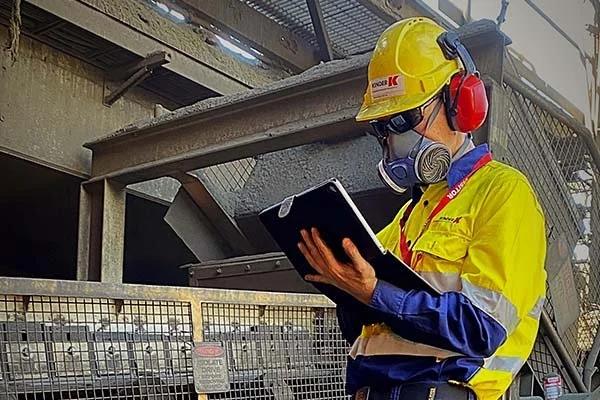

Kinder operates a high-margin, recurring consumables model supplying engineered wear parts to bulk materials handling customers. Despite a softer capex environment, its mission-critical consumables revenue has remained stable, reinforcing our bias toward businesses tied to production volumes rather than discretionary projects.

Vision Intelligence (Vision) has built a vertically integrated monitoring platform combining solar hardware, IoT sensors and a 24/7 monitoring centre. This has enabled strong unit economics, expanding customer use cases and growing demand across infrastructure, utilities and government-adjacent sectors.
Kinder and Vision were both introduced in our May 2025 letter as examples of what we want Attalis to own over the next decade: simple, repeat-purchase businesses with genuine moats, strong free cash flow and structural tailwinds.
A few early lessons stand out.
Vision – vertical and horizontal growth in “monitoring as a service”
Vision is proving that owning both the hardware and the data matters: a proprietary solar fleet, IoT sensors, a 24/7 ASIAL-graded monitoring centre and a growing dataset create real barriers to entry and attractive unit-level returns
The market is growing vertically as existing customers deepen their usage – moving from basic security to integrated monitoring of safety, environmental compliance and road risk
It is also growing horizontally as new customer segments (councils, utilities, ports, logistics, agriculture) recognise that remote monitoring can substitute for labour-constrained, compliance-heavy guarding models
Capture data, then create actionable events – a far more powerful long-term position than simply selling devices or labour.
Kinder – the value of recurring mission-critical consumables in a volatile macro environment
2025 has been a difficult year for large greenfield projects and capex decisions; election cycles, global volatility and commodity-price uncertainty have made customers cautious
Against that backdrop, Kinder’s recurring consumables revenue – underpinned by long-standing relationships and the razor/razor-blade model – has behaved as we hoped, with high repeat purchasing and strong free cash flow conversion
New projects remain important for long-term growth, but the thesis that mission-critical, engineered consumables tied to production volumes are resilient through cycles has been reinforced
Our bias is towards businesses where the majority of value sits in the ongoing service or consumable rather than in one-off capital projects.
How AI is actually helping – in practice, not theory
We have been deliberate about using AI as a tool to sharpen judgement rather than replace it. Across Attalis, Kinder and Vision we now have several workflows where AI is embedded into day-to-day work.
Vision – AI in market mapping, tendering and customer responses
AI workflows scrape and classify councils, utilities and SOCI-relevant assets by region and asset type, creating a live, ranked target list that has lifted outbound hit-rates and surfaced regional opportunities that were not previously in the pipeline
AI agents monitor SOCI and government tender portals and infrastructure news, flagging tenders that fit our solar monitoring and compliance sweet spot while cutting the time spent finding and qualifying relevant opportunities
For complex inbound enquiries, AI parses briefs, finds similar jobs in HubSpot and internal notes, and suggests comparable deployments and outcomes, giving sales a faster, evidence-based starting point and more consistent proposals
Kinder – AI in project targeting and customer development
AI mines project databases, ASX announcements and engineering news for bulk-material handling, terminal and conveyor projects, then groups them by owner, EPC / EPCM, location and likely conveyor duty to give the WA and national teams a prioritised call list
AI maps EPC / EPCM organisational charts and LinkedIn data to identify likely decision-makers and referrers, producing short research briefs so BDMs can open conversations at the right level
AI helps build a by-material, by-industry EDM and call script matrix, turning technical engineering detail into simple, benefit-led messaging for each segment
PE Deal-by-Deal – plenty of opportunity, not many that pass the bar
Since mid-2023 we have reviewed well over 200 opportunities across industrial, services, healthcare and consumer sub-sectors. The pipeline has not been the constraint. The bar has been.
For an opportunity to move from “interesting conversation” to serious work, it still needs four things at the same time:
Structural growth tailwind
Attractive unit economics and free cash flow
Backable, aligned management
A sensible entry valuation and deal structure
In practice, we often find two or three of these, but rarely all four. 2025 has reinforced that the deal-by-deal model only works if we keep saying no when something important is missing, even if the story is compelling.
Opportunities we are circling – and how they map to our principles
We are currently doing deeper work in three areas that each line up cleanly with one or more of our core principles. These are not signed deals, and we remain early and selective, but they give a practical sense of where our attention is.


Non-destructive testing and asset-integrity services
This is an industrial services platform providing recurring testing, inspection and certification tied to asset integrity and compliance.
What resonates with our principles
Formidable barriers to entry – deep technical capability, accreditation and national coverage create switching costs and a reputation moat
Structural growth tailwind – ageing infrastructure, tighter safety and ESG requirements and more complex assets all drive demand for independent testing
Simple, predictable cash generation – repeat, compliance-driven work with low capital intensity and good conversion of profit to cash
Catalyst for value creation – scope to professionalise systems, deepen key customer relationships and selectively consolidate smaller providers in a fragmented market
Key questions we are focused on include pricing power through cycles, margin resilience and how far the model can scale without diluting service quality.
Tech-enabled freight management and 4PL
This is an asset-light, tech-enabled freight-management and 4PL business that earns a take-rate on freight under management while providing customers with visibility and savings across their logistics spend.
Where it aligns with the Attalis lens
Simple and understandable model – clear take-rate economics on a large, recurring freight pool
Growth tailwind – rising logistics complexity, e-commerce and multi-carrier networks support the role of independent freight managers
Attractive unit economics – potential for strong incremental margins if churn is controlled and the platform drives deeper integration with customers
Catalyst for value creation – opportunities to sharpen pricing, expand into adjacent verticals and invest in product and data to make the platform harder to displace
Our work is centred on the durability of the moat versus larger 3PLs and software vendors, customer concentration and the ability to scale without compromising service.
Repeat-purchase, values-aligned consumer brands
We are also exploring consumer platforms built around high-repeat, values-aligned FMCG categories such as plant-based food and eco home-care products.
What maps clearly to our principles
Simple, tangible products – real, observable customer behaviour and straightforward unit economics
Structural growth tailwinds – health, sustainability and “better for you / better for the planet” themes that are likely to endure beyond short-term fads
Potential for a moat – brand, formulation IP and distribution can compound into a defensible position if executed with discipline
Our discipline here is around valuation, route-to-market risk and making sure brand strength is backed by repeatable, profitable customer cohorts rather than marketing spend alone.
We continue to welcome input from our network: industry insight, backable operators, and an indication of appetite should any of these opportunities move into the “live” category.
Re-stating the Attalis investment principles
When we relaunched Attalis, we set out a simple but demanding set of principles to guide capital deployment. They remain unchanged and have been reinforced by the past 18 months:
Structural growth tailwinds rather than short-term themes
Simple and understandable business models with clear, long-term flywheels
Formidable barriers to entry or a clear path to building a moat
Simple, predictable, free cash flow generation and high RoCE on incremental capital
A clear catalyst for value creation that we can evidence and help execute
Limited exposure to extrinsic factors we cannot control
Looking ahead – Attalis Circle and 2026
2026 will be a year of doing the work: consolidating Kinder and Vision, supporting management to execute their plans, and advancing only a small number of new opportunities that genuinely clear our bar. The temptation in environments like this is to broaden the funnel and loosen standards. Our intention is the opposite: to stay narrow, deep and patient.
If you would like to discuss our existing investments in more detail, understand how Attalis structures and manages deals, or explore how our approach may be relevant to you in the year ahead, please contact John Shin at john.shin@ataliscapital.com.
Warm regards,
Attalis Capital Team